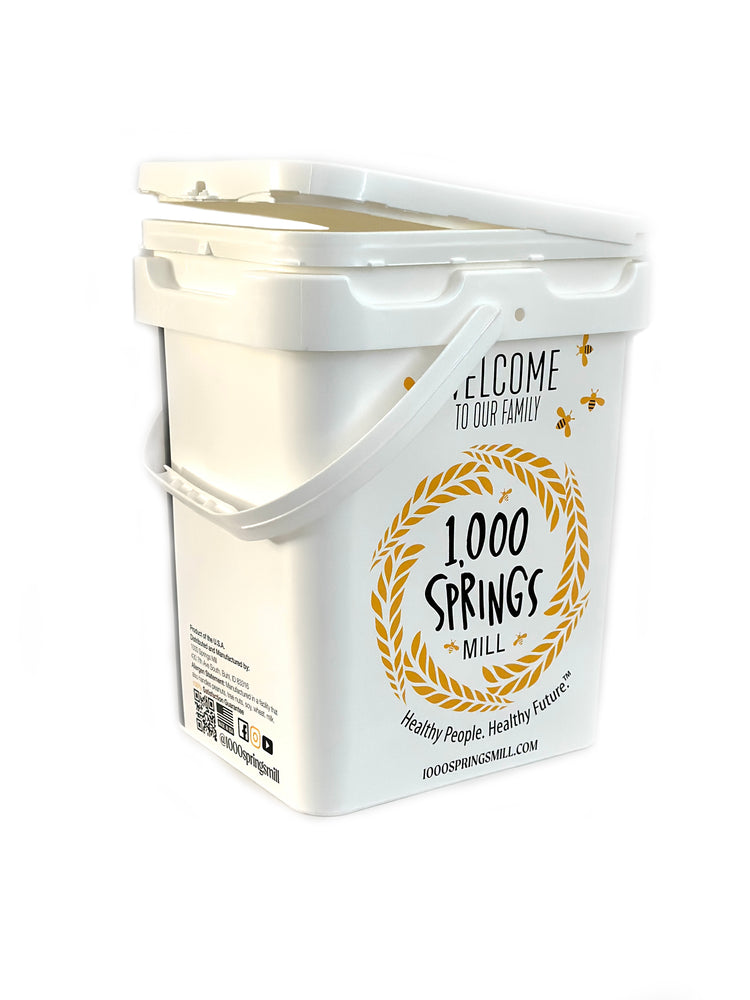
How to Store Grains and Beans for Long-Term Food Storage

Buying grains and beans in bulk is one of the more practical decisions you can make for your kitchen. It costs less per serving, cuts down on packaging, and means you're never one grocery run away from a decent meal. But bulk buying only pays off if what you store actually stays good.
The encouraging news is that dry grains and beans are among the most forgiving foods to store. Get a few basics right and you're looking at years of reliable shelf life, not months.
What Actually Ruins Stored Grains and Beans
Four things degrade dry goods over time: moisture, oxygen, light, and heat. Moisture is the most urgent of the four, since it invites mold and can ruin an entire container. Oxygen causes the slow oxidation that dulls flavor and degrades nutrients. Light accelerates that same process. And heat speeds up everything, which is why a hot garage is one of the worst places you can put your food storage.
Pests are the fifth concern, though good containers handle that problem automatically.
Every storage recommendation that follows is really just a way of addressing these five things.
Choosing the Right Container
Your container choice depends mostly on how long you plan to store something.
For anything you'll use within a few months, the original packaging is often fine as long as it's sealed and kept somewhere cool and dark. Resealable bags and airtight jars work well for the grains and beans in regular rotation.
For a year or more, food-grade buckets with gasket lids are the practical standard. They seal well, stack efficiently, keep pests out entirely, and hold enough to be worth the effort. A 5-gallon bucket holds roughly 25 to 35 pounds of most grains or beans depending on density.
For genuinely long storage, mylar bags with oxygen absorbers placed inside a bucket give you the best protection available to a home kitchen. The mylar blocks light and moisture, the absorber pulls out residual oxygen, and the bucket handles physical protection. It's a bit more work upfront but it's the setup most likely to have your wheat berries in good shape a decade from now.
Where to Store It
Cool, dark, and dry is the whole rule. A basement, an interior closet, or a pantry away from the stove all work well. Aim for consistently under 70 degrees if you can manage it, and lower is better.
Avoid garages, attics, and anywhere that swings between hot and cold with the seasons. Temperature cycling is harder on stored food than a steady moderate temperature. Keep containers off concrete floors too, since concrete transfers moisture. A pallet or a couple of boards underneath solves that.
What to Expect for Shelf Life
Stored properly, whole grains like wheat berries hold up remarkably well, often staying good for a decade or longer in sealed conditions. Whole grains outlast milled flour by a wide margin, because grinding exposes the oils in the germ to air. If you're storing for the long haul, storing whole and milling as needed is the better strategy.
Dry beans are similarly durable. They may take longer to cook as they age and older beans can turn out less evenly, but they stay safe and nutritious well past the point where they cook quickly. If you rotate your stock and cook them properly, you'll rarely notice.
Rolled oats and brown rice have shorter windows than whole wheat because of their higher oil content, so those are worth rotating more actively.
A Few Habits That Make It Easier
Label everything with the date you packed it. Store what you actually eat rather than what a list told you to buy. And use your storage regularly instead of treating it as untouchable, since rotating stock is what keeps the whole system working.
Start with quality and the rest gets easier. Our organic and non-GMO grains and beans are grown on family farms in Buhl, Idaho and packaged in sizes built for exactly this kind of storage, from 25-pound bags to sealed 5-gallon buckets. Browse our bulk options and build a pantry you can count on.